Training remains an important lever, but learning and development take shape in the professional context. One powerful accelerator of people's growth is learning from those who already hold the experience and knowledge inside the company.
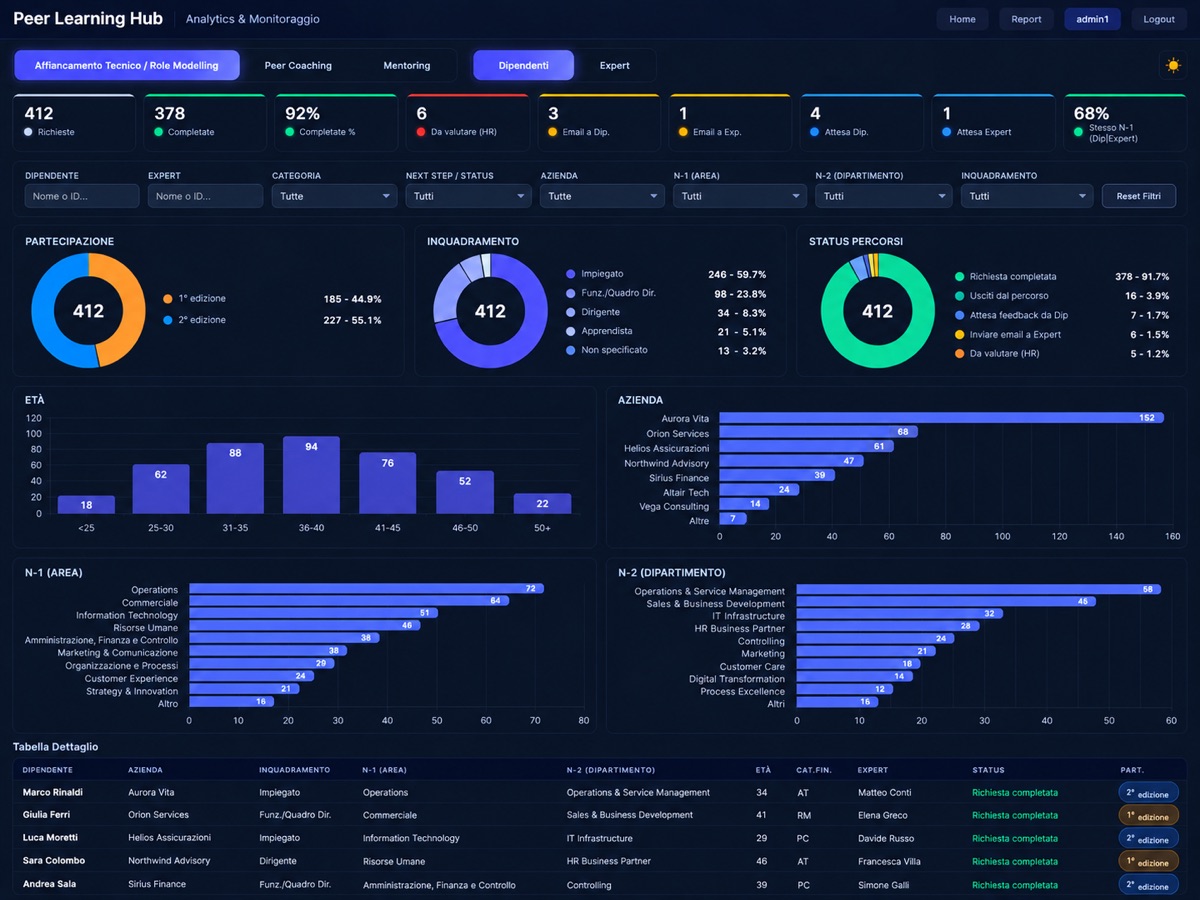
Three simple formats, around six meetings over a few months, automated day-to-day management and full visibility for HR on how the programme is going.
Training keeps doing its job. Peer Learning covers a different space: it brings development into real work, building on skills and experience the company already has.
That connection can be governed, without building new organisational structures for HR.
The initiative plugs into the existing process: there is no need to redesign Performance Management, or to map all of the organisation's knowledge up front.
Little overhead: the value lies in the experience people already have and in the exchange about real situations.
A person builds technical or operational skills by working with a colleague who is an expert on that content.
A person observes and explores with a colleague an effective way of handling people, decisions or managerial situations.
Two suitably trained people, with comparable responsibilities, work through real problems they face in different areas.
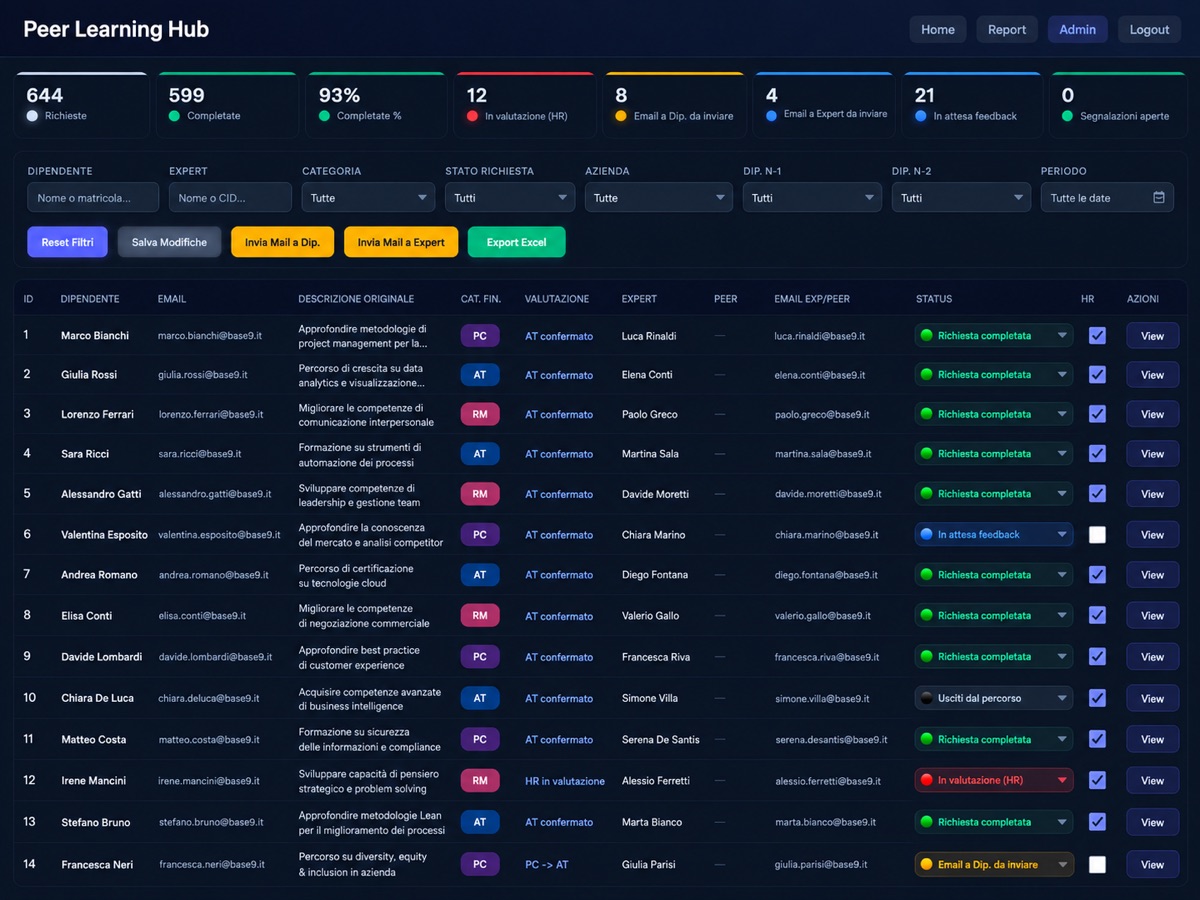
As the programme grows, requests, confirmations, refusals, alternatives, reminders and monitoring can turn into a great deal of administrative work. That is exactly what we automate.
Everything in one place. Thousands of emails can become almost zero.
HR sees requests, matches, progress and data in a single platform: no parallel spreadsheets, no email ping-pong, no attachments to piece together and no manual exports just to know where things stand.
The initial effort grows with the population involved; the day-to-day management of individual journeys, however, stays largely automated.
100 → 500 → 1,000 peopleMore development opportunities, not a back office 5 or 10 times bigger.
HR keeps what matters: steering the initiative, communication, oversight and stepping in on the cases that need attention.
The point is not to take HR out of the process, but to focus its time on the activities that genuinely require judgement, relationships and vision.
Positioning the initiative, engaging the business, checking the initial inputs, governing exceptions and reading the results.
Requests, notifications, replies, status updates, reminders, monitoring and data collection.
Method, flows and platform already exist. For a new client the work is not inventing the system from scratch, but configuring it around their own process, their own people and their own rules.
We helped the L&D team extend Peer Learning to the whole population, cutting costs and organisational effort dramatically and making the programme operational in a few weeks.
Automating does not mean spamming. Communications guide people through precise steps, with clear requests and immediate actions — CTAs, confirmations and drop-down menus — so every email moves the journey forward instead of adding noise.
The performance process, the people data, the people themselves and their experience are already in place. The next step is to define together the population, the rules and the configuration of the programme, and build a concrete proposal for your company.