

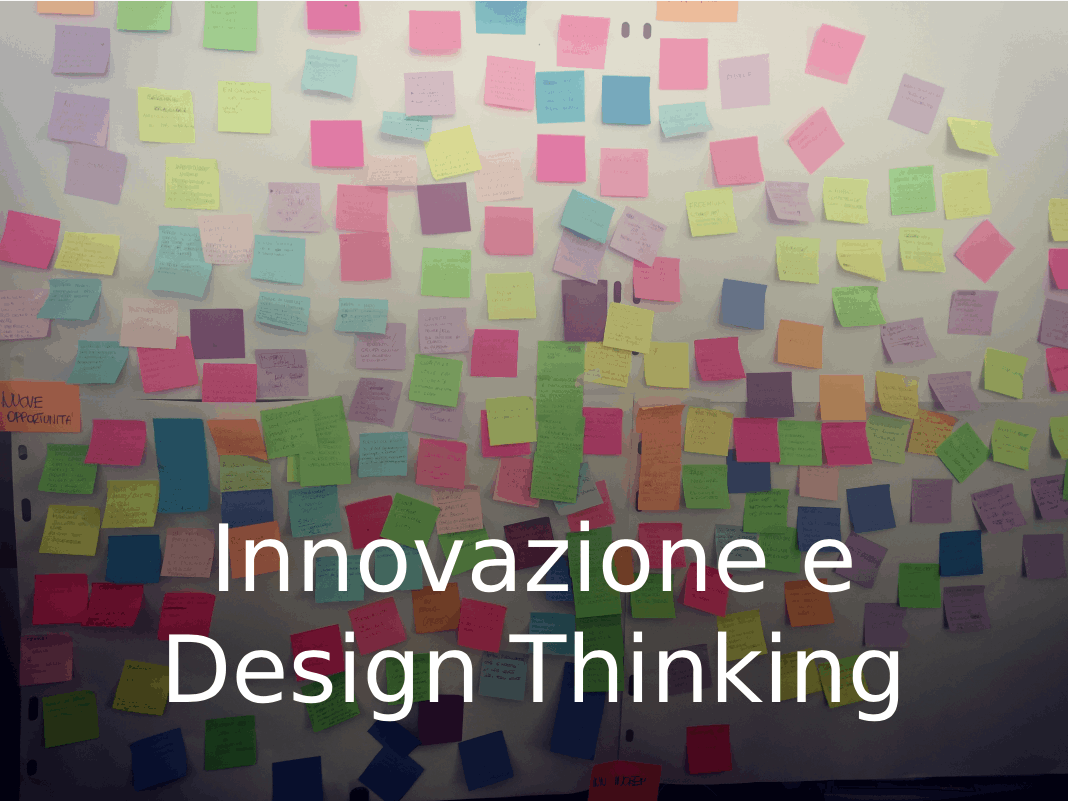
Design Thinking programme, developed for banks, non-profit organizations and multinational service companies. Client not named for confidentiality reasons.
Corporate Design Thinking: the need
Professionals in direct contact with clients are often pushed to “sell more” or “collect more” without anyone building a shared method with them to generate value beyond the transaction. Positioning themselves as innovation partners for the client — not only as a sales channel for a product or service — requires a skill that no one-off inspirational training can truly build.
The typical problem with traditional innovation training is that it remains theoretical, disconnected from the team's real challenges, and generates enthusiasm that fades within a few weeks because there is no mechanism that leads people to experiment with what they have learned with real clients, in the field. A one-day workshop on a method such as Design Thinking, however well conducted, without a programme that follows it risks remaining nothing more than a pleasant memory.
For HR and L&D, the question becomes: how can a corporate Design Thinking programme be built that does not end with a workshop, but becomes a working method that the team continues to apply with real clients even after the programme has ended?
How we worked: the Design Thinking programme
We designed a blended corporate Design Thinking programme, structured around IDEO's Double Diamond methodology, combining virtual learning, in-person workshops and a six-week field acceleration programme.
Virtual learning
Before the workshop, participants access an online course to acquire knowledge of the principles and methods of Design Thinking and the new paradigms of innovation through real case histories on technology, client relationships and competition. This makes it possible to build a common language even before entering the classroom.
In-person workshop
The workshop opens with an ice-breaker exercise that highlights the power of the team compared with individual performance — immediately encouraging people to see the programme as teamwork. Participants, in small groups, then work on the real challenge of their own role through the phases of Design Thinking, with the objective of identifying areas of value on which to build their own innovation.
Acceleration programme (approximately 6 weeks)
This is where the difference lies compared with a traditional corporate Design Thinking workshop: after the classroom session, the subgroups continue to work together like a small start-up, including remotely, with periodic online sessions for discussion and feedback.
Presentation
The programme concludes with a presentation session in which the subgroups present the experiments carried out in the field. Involving organizational representatives as a kind of “jury” for the solutions tested connects the activity to day-to-day business and increases its actual adoption beyond the end of the programme.
The results of the corporate Design Thinking programme
- The teams leave with a value proposition validated in the field with real clients, not with an idea left on a workshop slide.
- The prototyping and testing mechanism reduces the risk of investing time and energy in solutions that, when tested with real clients, do not work.
- The involvement of organizational representatives in the final session permanently connects the corporate Design Thinking method to the team's daily work, beyond the duration of the training programme.
- We generated up to 11 new validated prototypes for internal projects, and 3 of these were implemented by the company in the first year.